Table of Contents
JEE Advanced 2026: Registration, Syllabus, Exam Pattern, Result and Complete Preparation Guide
If cracking JEE Main felt like running a marathon, JEE Advanced is the ultra-marathon that comes right after. It’s India’s toughest engineering entrance exam — and it’s the only gateway to the 23 Indian Institutes of Technology (IITs), the most prestigious engineering institutions in the country.
But here’s the thing: JEE Advanced is not impossible. Every year, thousands of students crack it and go on to build extraordinary careers. The difference between those who make it and those who don’t usually comes down to strategy, not just intelligence.
This complete guide covers everything about JEE Advanced 2026 — eligibility, registration, exam pattern, syllabus, cutoff, preparation strategy, and what comes after. Whether you’re a Class 12 student just starting your JEE journey or someone already deep in preparation, this guide has everything you need.
Quick Snapshot: JEE Advanced 2026
| Feature | Details |
|---|---|
| Full Name | Joint Entrance Examination Advanced |
| Conducted by | IIT Roorkee (JEE Advanced 2025 was IIT Kanpur; rotates annually) |
| Official Website | jeeadv.ac.in |
| Eligibility | Top 2.5 lakh JEE Main 2026 qualifiers |
| Exam Date (Tentative) | May/June 2026 |
| Number of Papers | 2 (Paper 1 + Paper 2, both mandatory) |
| Duration | 3 Hours each (6 Hours total) |
| Exam Mode | Computer-Based Test (CBT) |
| Subjects | Physics, Chemistry, Mathematics |
| Colleges Accepting | All 23 IITs |
| Total IIT Seats | Approximately 17,000+ |
| Registration Fee | INR 3,500 (General/OBC); INR 1,750 (SC/ST/PwD/Female) |
| Score Validity | 1 Year |
1. What Is JEE Advanced? — The Complete Picture
JEE Advanced: India’s Gateway to IITs
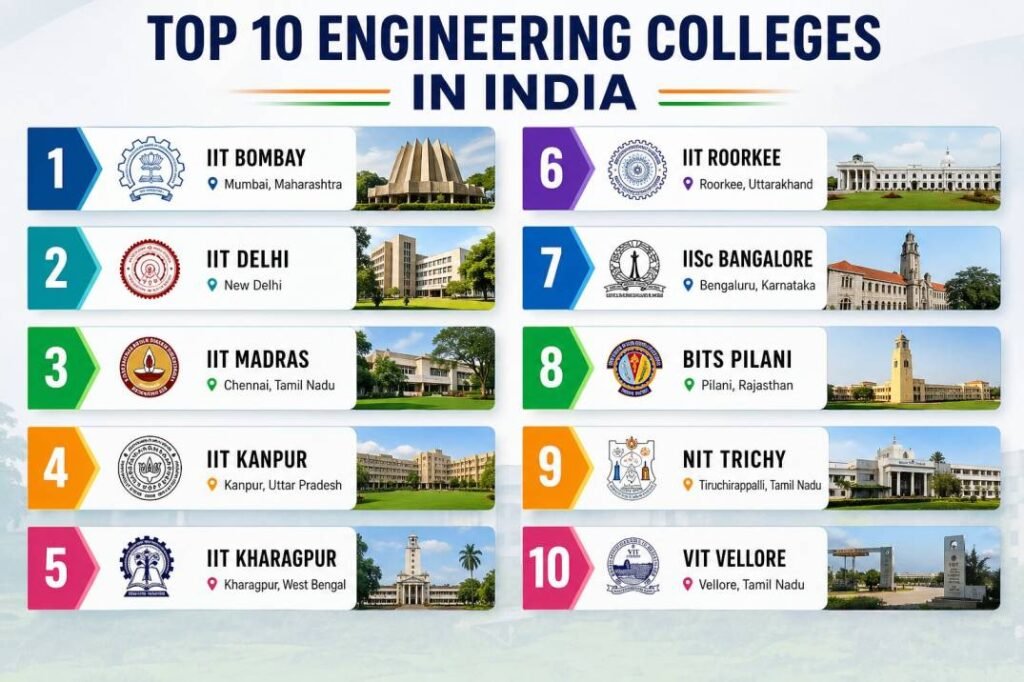
JEE Advanced is the second stage of India’s Joint Entrance Examination — conducted after JEE Main. While JEE Main grants admission to NITs, IIITs, and GFTIs, JEE Advanced is the sole entrance exam for all 23 IITs — from IIT Bombay and IIT Delhi to IIT Madras, IIT Kanpur, IIT Kharagpur, and beyond.
What makes JEE Advanced different from any other engineering exam:
- Extremely high difficulty — questions test deep conceptual understanding, not just formula application
- Negative marking — wrong answers deduct marks, making guessing dangerous
- Variable marking schemes — partial marks, full marks, and negative marks in the same paper
- Two mandatory papers — you must attempt both Paper 1 and Paper 2 to be eligible for ranking
JEE Advanced vs JEE Main: Key Differences
| Factor | JEE Main | JEE Advanced |
|---|---|---|
| Conducted by | NTA | IIT (rotates annually) |
| Purpose | NITs, IIITs, GFTIs, Private colleges | IITs only |
| Difficulty | High | Very High (conceptual depth) |
| Eligibility | Class 12 PCM students | Top 2.5 lakh JEE Main qualifiers |
| Attempts | 6 (over 3 years) | 2 (in 2 consecutive years) |
| Papers | 1 Paper (3 hours) | 2 Papers (3 hours each) |
| Question Types | MCQ + Numerical | MCQ + Numerical + Multiple correct + Paragraph-based |
| Negative Marking | -1 per wrong MCQ | Complex variable (see pattern below) |
2. JEE Advanced 2026 Eligibility: Who Can Appear?
Understanding eligibility is crucial because JEE Advanced has strict criteria:
Criterion 1: Performance in JEE Main 2026
- Must be among the top 2.5 lakh rank holders in JEE Main 2026 (Paper 1, B.Tech)
- Category-wise distribution of 2.5 lakh seats:
- General (CRL): ~96,187 candidates
- OBC-NCL: ~67,500 candidates
- SC: ~37,500 candidates
- ST: ~18,750 candidates
- PwD: Proportional to above categories
- EWS: ~25,000 candidates
Criterion 2: Age Limit
- Born on or after October 1, 2001 (General/OBC/EWS)
- Born on or after October 1, 1996 (SC/ST/PwD) — 5-year relaxation
Criterion 3: Number of Attempts
- Maximum 2 attempts in 2 consecutive years
- First attempt eligible: Year of Class 12 or the year after
- Students who appeared in JEE Advanced 2025 can appear again in 2026 (if it’s their second attempt)
Criterion 4: Earlier Admission to IIT
- Candidates who have been previously admitted to an IIT (even after joining) are NOT eligible for JEE Advanced 2026
- Exception: Candidates who joined an IIT preparatory course are eligible
Criterion 5: Class 12 Percentage
- Must have appeared in Class 12 (or equivalent) for the first time in 2025 or 2026
- For admission to IIT: Minimum 75% aggregate in Class 12 (65% for SC/ST/PwD) OR top 20 percentile in respective board
3. JEE Advanced 2026: Important Dates (Tentative)
| Event | Tentative Date |
|---|---|
| JEE Main 2026 Session 2 Result | May 2026 |
| JEE Advanced 2026 Registration Opens | May 2026 |
| JEE Advanced 2026 Registration Closes | May 2026 (typically 7–10 days window) |
| JEE Advanced 2026 Admit Card | May/June 2026 |
| JEE Advanced 2026 Exam Date | Last Sunday of May 2026 (tentative) |
| JEE Advanced Answer Key (Provisional) | June 2026 |
| Challenge Window for Answer Key | June 2026 |
| JEE Advanced Result 2026 | June 2026 |
| AAT (Architecture Aptitude Test) | June 2026 (for B.Arch at IITs) |
| JoSAA Counselling Begins | June/July 2026 |
All dates are tentative. Official dates will be published at jeeadv.ac.in once IIT Roorkee (or the conducting IIT for 2026) makes the official announcement.
4. JEE Advanced 2026 Registration: How to Apply
Registration Process
Step 1: Check your JEE Main 2026 rank — confirm you’re in the top 2.5 lakh
Step 2: Visit the official website: jeeadv.ac.in
Step 3: Log in using your JEE Main 2026 Application Number and Password
Step 4: Complete the JEE Advanced registration form:
- Verify personal details (pre-filled from JEE Main)
- Choose exam city preferences
- Upload scanned photograph and signature
- Upload Class 12 marksheet (or proof of appearing)
Step 5: Pay the registration fee:
- General/OBC-NCL: INR 3,500
- SC/ST/PwD/Female candidates: INR 1,750
- Foreign National candidates (SAARC): USD 160
Step 6: Download and save the registration confirmation
Documents Required for Registration
- JEE Main 2026 Admit Card
- Class 10 Certificate (for date of birth)
- Class 12 Marksheet or Hall Ticket (if result not declared)
- Category Certificate (SC/ST/OBC-NCL/EWS/PwD) if applicable
- Scanned photograph (white background, recent)
- Scanned signature
5. JEE Advanced 2026 Exam Pattern
This is where JEE Advanced truly separates itself. The question types are far more varied and complex than JEE Main.
Paper 1 and Paper 2 Structure
Both Paper 1 and Paper 2 are identical in structure:
- Duration: 3 hours each
- Subjects: Physics, Chemistry, Mathematics (equal sections in each paper)
- Total marks: Typically 180–200 marks per paper (varies slightly each year)
Question Types in JEE Advanced
| Question Type | Description | Marking |
|---|---|---|
| Single Correct MCQ | 4 options, 1 correct | +3, -1 |
| Multiple Correct MCQ | 4 options, 1 or more correct | +4 (full), Partial marks, -2 (wrong) |
| Numerical Answer Type | Non-negative integer answer | +4, 0 (no negative) |
| Paragraph/Comprehension Based | 2–3 questions based on a passage | Varies (+3, 0 or +4, -2) |
| Matrix Match | Match entries in two columns | Partial marking |
What Makes Multiple Correct MCQs Dangerous?
In JEE Advanced, Multiple Correct MCQs are the most challenging:
- If all correct options are selected correctly: Full +4 marks
- If only some correct options selected (no wrong one): Partial marks
- If any incorrect option selected: -2 marks immediately
This means you need to be 100% sure about each option you choose — not just the “most likely correct” option.
JEE Advanced 2026 Syllabus
The JEE Advanced syllabus is based on Class 11 and 12 NCERT Physics, Chemistry, and Mathematics — but at a significantly deeper conceptual level.
6. JEE Advanced 2026 Syllabus: Chapter-Wise Breakdown
Physics Syllabus
Mechanics (High Weightage)
- Kinematics (1D, 2D, Projectile, Circular Motion)
- Laws of Motion (Newton’s Laws, Friction, Constraint Motion)
- Work, Energy, Power
- Rotational Motion (Moment of Inertia, Rolling, Angular Momentum)
- Gravitation (Orbital mechanics, Kepler’s Laws)
- Properties of Matter (Elasticity, Surface Tension, Viscosity, Fluid Statics and Dynamics)
- SHM and Waves
Thermodynamics
- Kinetic Theory of Gases
- Laws of Thermodynamics
- Heat Transfer (Conduction, Convection, Radiation)
- Thermal Expansion
Electromagnetism (Highest Weightage)
- Electrostatics (Coulomb’s Law, Gauss’s Law, Potential, Capacitance)
- Current Electricity (Kirchhoff’s Laws, Wheatstone Bridge, RC circuits)
- Magnetic Effects (Biot-Savart, Ampere’s Law, Magnetic Force)
- Electromagnetic Induction (Faraday’s Law, Lenz’s Law, Inductance)
- AC Circuits
Optics
- Ray Optics (Reflection, Refraction, Lenses, Prisms, Optical instruments)
- Wave Optics (Interference, Diffraction, Polarization, YDSE)
Modern Physics
- Dual Nature (Photoelectric Effect, de Broglie)
- Atomic Structure (Bohr Model, Spectrum)
- Nuclear Physics (Radioactivity, Fission, Fusion)
- Semiconductor Devices
Chemistry Syllabus
Physical Chemistry
- Mole Concept and Stoichiometry
- Atomic Structure and Chemical Bonding
- States of Matter (Gas, Liquid, Solid)
- Thermodynamics and Thermochemistry
- Chemical Equilibrium (Kp, Kc, Le Chatelier’s Principle)
- Ionic Equilibrium (pH, Buffer, Hydrolysis, Solubility Product)
- Electrochemistry (Nernst Equation, Galvanic Cells, Electrolysis)
- Chemical Kinetics (Rate Laws, Arrhenius Equation)
- Surface Chemistry
Inorganic Chemistry
- Periodic Table and Periodicity
- s-Block Elements (Group 1 and 2)
- p-Block Elements (Groups 13–18) — Very High Weightage in JEE Advanced
- d and f Block Elements
- Coordination Compounds (IUPAC, Isomerism, VBT, CFT)
- Metallurgy and Extraction
- Qualitative Analysis
Organic Chemistry
- General Organic Chemistry (GOC: Inductive, Resonance, Hyperconjugation)
- Hydrocarbons (Alkanes, Alkenes, Alkynes, Benzene and Aromaticity)
- Reaction Mechanisms (SN1, SN2, E1, E2, Addition, Elimination, Rearrangements)
- Functional Groups (Alcohols, Aldehydes, Ketones, Acids, Amines, Esters)
- Stereochemistry (R/S, E/Z, Fischer projections, Optical activity)
- Biomolecules (Carbohydrates, Proteins, Nucleic Acids, Lipids)
- Polymers and Chemistry in Everyday Life
Mathematics Syllabus
Algebra
- Complex Numbers (Argand Plane, Roots of Unity, De Moivre’s Theorem)
- Matrices and Determinants (Properties, Inverse, System of Equations)
- Permutations and Combinations
- Binomial Theorem
- Sequences and Series (AP, GP, AGP, Telescoping)
- Probability (Classical, Conditional, Bayes’ Theorem)
Calculus (Highest Weightage)
- Functions (Domain, Range, Composition, Inverse)
- Limits, Continuity, and Differentiability
- Differentiation (Chain Rule, Implicit, Parametric)
- Applications of Derivatives (Maxima/Minima, Tangent/Normal, Mean Value Theorems)
- Integration (Substitution, By Parts, Partial Fractions, Definite Integral Properties)
- Applications of Integration (Area, Volume)
- Differential Equations
Coordinate Geometry
- Straight Lines and Pair of Lines
- Circles (Family of Circles, Radical Axis)
- Conic Sections (Parabola, Ellipse, Hyperbola — all properties)
- 3D Geometry (Lines, Planes, Distance, Skew Lines)
Vectors
- Vector Algebra (Dot Product, Cross Product, Scalar Triple Product)
- Applications in Geometry
Trigonometry
- Trigonometric Functions and Identities
- Inverse Trigonometry
- Equations and Inequations
7. JEE Advanced Cutoff 2026: What Score Do You Need?
JEE Advanced has two types of cutoffs:
Qualifying Marks for Ranking
To receive a rank in JEE Advanced, you must score minimum marks in each subject AND in aggregate:
| Category | Each Subject (%) | Aggregate (%) |
|---|---|---|
| General (CRL) | 10% | 35% |
| OBC-NCL / EWS | 9% | 31.5% |
| SC / ST / PwD | 5% | 17.5% |
(Based on approximate trends from recent years; exact values announced with results)
Branch Cutoff Ranks for IIT Admissions
| IIT + Branch | General (Opening Rank) |
|---|---|
| IIT Bombay — CSE | 1 – 67 |
| IIT Delhi — CSE | 68 – 144 |
| IIT Madras — CSE | 144 – 300 |
| IIT Kanpur — CSE | 200 – 450 |
| IIT Kharagpur — CSE | 300 – 600 |
| IIT Roorkee — CSE | 400 – 900 |
| IIT Hyderabad — CSE | 800 – 1,500 |
| IIT Bombay — Mechanical | 800 – 2,000 |
| IIT Dhanbad (ISM) — Mining | 8,000 – 15,000 |
These are indicative ranges based on JoSAA 2024–25 data. Actual cutoffs vary each year.
8. JEE Advanced 2026 Preparation Strategy: How to Crack It
Foundation: The Non-Negotiables
1. NCERT is the Base, Not the Ceiling NCERT textbooks form the conceptual foundation — but JEE Advanced tests those concepts at a depth that goes far beyond NCERT. Read NCERT thoroughly first, then go deeper with advanced resources.
2. Concept-First Approach Never memorize formulas without understanding derivations. JEE Advanced regularly asks questions that require deriving results on the spot — something impossible without conceptual clarity.
3. Previous Year Papers Are Gold JEE Advanced papers from 2007–2025 are the single best preparation resource. They reveal:
- The actual difficulty level
- How questions are framed
- Which topics are repeatedly tested
- The kind of multi-step thinking required
Solve at least 10 years’ worth of JEE Advanced papers under timed exam conditions.
Subject-Wise Strategy
Physics: Mechanics + Electromagnetism = 60% of Your Score
- Start with Mechanics — it’s the foundation of everything else
- Master Newton’s Laws before Rotational Mechanics
- Electromagnetism (EMF, Induction, AC Circuits) — solve 50+ problems per chapter
- Modern Physics: Understand Bohr Model deeply; nuclear decay calculations
- Best resource: HC Verma (Concepts of Physics) — read theory, solve examples, then exercises
Chemistry: Inorganic + Organic = Highest ROI
- Physical Chemistry: 3–4 chapters (Thermodynamics, Equilibrium, Electrochemistry, Kinetics) carry most questions — practice numerical problems
- Inorganic: p-Block is the highest-yielding section; read NCERT + make detailed notes on reactions
- Organic: Reaction mechanism mastery is non-negotiable; practice named reactions + stereochemistry
- Best resource: OP Tandon (Physical), NCERT + class notes (Inorganic), Morrison & Boyd (Organic)
Mathematics: Calculus + Coordinate Geometry = Core Score
- Calculus is the backbone — Integration problems in JEE Advanced are legendary in difficulty
- Practice definite integration thoroughly: properties, complex substitutions
- Coordinate Geometry: Know all properties of conics — questions combine multiple concepts
- Complex Numbers and Probability are consistent high-scorers — invest time here
- Best resource: Arihant or Cengage series + RD Sharma for foundation
Mock Test Strategy
When to start full mocks: After completing 70% of the syllabus (typically 5–6 months into preparation)
Mock test frequency:
- During preparation phase: 1 full JEE Advanced mock (both papers) every 2 weeks
- Final 2 months: 1 full mock every week
- Final month: Alternate between mocks and specific chapter revision
Post-mock analysis: For every mock, spend equal time analyzing:
- Which questions did you get wrong and why?
- Which correct answers were lucky guesses (risky in JEE Advanced)?
- Which topics consistently give you trouble?
9. JEE Advanced Result and What Comes After
JEE Advanced Result 2026
After the exam:
- Provisional Answer Key released — candidates can challenge
- Final Answer Key published after review
- JEE Advanced Result 2026 declared with marks and AIR (All India Rank)
- Category ranks also provided (CRL, OBC, SC, ST, EWS, PwD)
JoSAA Counselling: Getting Your IIT Seat
After results, JoSAA (Joint Seat Allocation Authority) conducts counselling for IIT, NIT, IIIT, and GFTI seats together:
- Register on josaa.nic.in
- Fill college and branch preferences (you can fill all IITs + all NITs)
- Seat allotment based on rank + preferences + category
- Accept seat + pay fee + document verification
- Report to allotted IIT
Pro Tip: Fill as many genuine preferences as possible. Many students with 5,000–8,000 ranks get very good branches at newer IITs (Hyderabad, Gandhinagar, Roorkee, Palakkad, Tirupati) by filling comprehensive preference lists.
AAT — Architecture Aptitude Test
If you want B.Arch at IIT Kharagpur or IIT Roorkee, you must also clear the Architecture Aptitude Test (AAT) — conducted after JEE Advanced results. It tests freehand drawing, spatial visualization, and design aptitude (pen-and-paper test).
10. Frequently Asked Questions About JEE Advanced 2026
Q: What is the official website for JEE Advanced 2026? A: The official JEE Advanced website is jeeadv.ac.in. All registration, admit card downloads, answer keys, and results are published here.
Q: How many attempts are allowed for JEE Advanced? A: A maximum of 2 attempts in 2 consecutive years. Students who appeared in JEE Advanced 2025 are eligible to appear in 2026 as their second and final attempt.
Q: What is the eligibility for JEE Advanced 2026? A: You must be among the top 2.5 lakh rank holders in JEE Main 2026 (Paper 1), born on or after October 1, 2001 (General), and must not have previously taken admission to an IIT.
Q: How many students qualify for JEE Advanced from JEE Main? A: Top 2.5 lakh students (based on JEE Main 2026 All India Rank) are eligible to register for JEE Advanced 2026.
Q: What is the total marks in JEE Advanced? A: JEE Advanced has 2 papers, each typically worth 180–200 marks. Total marks across both papers are usually 360–400 marks (the exact figure varies slightly each year based on question distribution).
Q: Is NCERT enough for JEE Advanced? A: No. NCERT provides the conceptual foundation, but JEE Advanced requires significantly deeper understanding. Students must use advanced resources like HC Verma (Physics), OP Tandon (Chemistry), and Cengage/Arihant (Mathematics) alongside NCERT.
Q: Which IIT conducts JEE Advanced 2026? A: The conducting IIT rotates each year. For 2025, it was IIT Kanpur. For 2026, the conducting IIT will be announced officially at jeeadv.ac.in.
Q: Can I appear for JEE Advanced without giving JEE Main? A: No. JEE Main is the qualifying exam for JEE Advanced. You cannot directly appear for JEE Advanced without first clearing the JEE Main cutoff (top 2.5 lakh).
Q: What happens if I clear JEE Advanced but don’t get a seat I want? A: Through JoSAA, you can fill preferences for all 23 IITs and all branches. Many students accept a good IIT branch that may not be their first choice, then explore internal branch change after 1–2 semesters based on academic performance.
Final Verdict: Your JEE Advanced 2026 Action Plan
JEE Advanced is hard — genuinely, objectively hard. But it is crackable with the right approach. Every year, ~17,000 students earn IIT seats. They’re not superhuman; they’re well-prepared.
Start here:
- Clear JEE Main 2026 first — aim for top 10,000 rank for comfortable JEE Advanced eligibility
- Visit jeeadv.ac.in regularly from April 2026 for official announcements
- Solve JEE Advanced 2020–2025 papers — start today, regardless of where you are in syllabus
- Concept over memorization — every formula needs to be understood, not just remembered
- Take timed mock tests — exam temperament in JEE Advanced is as important as knowledge
The IITs are not just colleges. They are communities of brilliant, curious people who go on to change industries, build companies, lead research, and shape the world. Getting there requires the most focused months of your academic life.
But it’s worth it. Start now. 🎯