
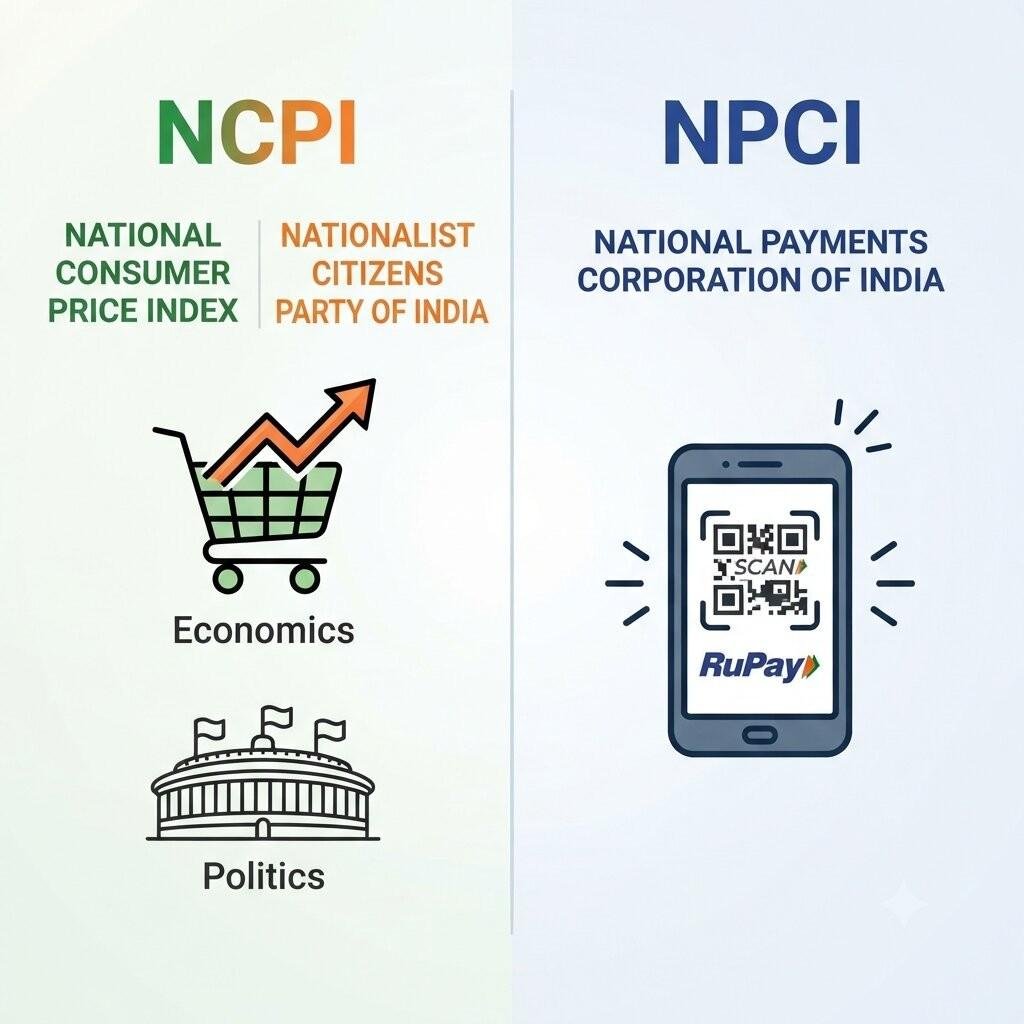
NPCI Full Form: Meaning, Functions, Services, and Importance in Digital Payments
In today’s digital world, making payments has become easier than ever. Whether you use UPI, RuPay cards, BHIM, or IMPS, there is one organization working behind the scenes to make these transactions smooth and secure—NPCI.
Many students come across the term NPCI while studying banking, finance, current affairs, or digital payment systems. Understanding the NPCI full form, its functions, and its role in India’s digital economy is important for school exams, competitive examinations, and general knowledge.
In this article, we will explore everything about NPCI in a simple and student-friendly manner.
NPCI Full Form
The NPCI full form is National Payments Corporation of India. It is the umbrella organization responsible for operating retail payment and settlement systems in India.
| Abbreviation | Full Form |
|---|---|
| NPCI | National Payments Corporation of India |
NPCI has played a major role in transforming India into one of the world’s leading digital payment economies.
What is NPCI?
National Payments Corporation of India (NPCI) is a non-profit organization established to develop and manage digital payment infrastructure across India. It was created with the support of the Reserve Bank of India (RBI) and the Indian Banks’ Association (IBA) to make payment systems more secure, efficient, and accessible.
NPCI operates several popular payment platforms that millions of Indians use every day.
Some of its well-known services include:
UPI (Unified Payments Interface)
RuPay
IMPS
BHIM
NACH
Bharat Bill Payment System (BBPS)
FASTag
National Financial Switch (NFS)
History of NPCI
NPCI was established in 2008 to provide a robust payment and settlement infrastructure for India. It was formed under the provisions of the Payment and Settlement Systems Act, 2007.
The organization’s goal was to create a unified system that would simplify banking and digital transactions for citizens.
Key Milestones
| Year | Event |
|---|---|
| 2008 | NPCI established |
| 2009 | Began operations |
| 2010 | IMPS launched |
| 2012 | RuPay card introduced |
| 2016 | UPI launched |
| 2016 | BHIM app launched |
| Present | Supports billions of digital transactions annually |
Headquarters of NPCI
NPCI is headquartered in:
📍 Mumbai, Maharashtra, India.
| Detail | Information |
|---|---|
| Organization | NPCI |
| Full Form | National Payments Corporation of India |
| Headquarters | Mumbai |
| Country | India |
| Founded | 2008 |
Objectives of NPCI
NPCI was created with several important objectives.
1. Promote Digital Payments
NPCI encourages electronic transactions and reduces dependence on cash.
2. Improve Payment Infrastructure
It develops secure and reliable payment systems across the country.
3. Enhance Financial Inclusion
NPCI aims to bring banking services to rural and underserved populations.
4. Increase Efficiency
It simplifies payment processes and reduces transaction time.
5. Encourage Innovation
NPCI continuously develops new technologies and payment solutions.
Functions of NPCI
NPCI performs many critical functions within India’s banking and payment ecosystem.
Managing Digital Payment Systems
NPCI operates and monitors several payment platforms.
Processing Transactions
It facilitates secure money transfers between banks.
Settlement Services
NPCI ensures funds are settled accurately and efficiently.
Technology Development
It develops innovative payment solutions for consumers and businesses.
Security Management
NPCI maintains secure digital payment infrastructure to protect users.
Major Services Offered by NPCI
NPCI is responsible for several popular payment systems used daily across India.
UPI (Unified Payments Interface)
UPI is one of NPCI’s most successful innovations.
Features
Instant money transfer
24×7 availability
Mobile-based payments
QR code transactions
Bank-to-bank transfers
Today, UPI is among the most widely used digital payment systems in the world.
IMPS (Immediate Payment Service)
IMPS allows users to transfer money instantly between bank accounts.
Benefits
Real-time transactions
Available 24/7
Secure fund transfers
IMPS laid the foundation for future payment innovations like UPI.
RuPay
RuPay is India’s domestic card payment network.
Advantages
Lower transaction costs
Secure payments
Wide acceptance across India
RuPay serves as an alternative to international card networks.
BHIM
BHIM stands for Bharat Interface for Money.
It is a mobile application that enables UPI-based digital payments.
Features
Easy money transfer
QR code payments
Multiple bank account support
BHIM has helped increase digital payment adoption across India.
NACH
NACH stands for National Automated Clearing House.
It facilitates bulk transactions such as:
Salary payments
Pension payments
Subsidies
Utility bill collections
NACH improves efficiency in recurring financial transactions.
Bharat Bill Payment System (BBPS)
BBPS allows consumers to pay various bills through a single platform.
Supported Payments
Electricity bills
Water bills
Gas bills
Mobile recharge
DTH services
This system simplifies bill payments for users.
Importance of NPCI in India
NPCI has transformed India’s payment ecosystem.
Faster Transactions
Money can be transferred instantly.
Financial Inclusion
People in rural areas can access digital payment services.
Reduced Cash Dependency
Digital payments minimize the need for physical cash.
Increased Transparency
Electronic records improve accountability.
Economic Growth
Efficient payment systems support business activities and economic development.
NPCI and Digital India
NPCI has been a major contributor to India’s digital transformation.
Its platforms support government initiatives aimed at:
Digital banking
Financial inclusion
Cashless transactions
Digital commerce
The success of UPI has made India a global leader in digital payments.
Advantages of NPCI
NPCI offers several benefits to citizens and businesses.
Secure Transactions
Advanced security systems protect users.
Easy Accessibility
Services are available across urban and rural areas.
Low Transaction Costs
Digital payments are cost-effective.
Instant Fund Transfers
Transactions happen within seconds.
Improved Banking Services
Customers enjoy faster and more convenient banking experiences.
Challenges Faced by NPCI
Despite its success, NPCI faces certain challenges.
Cybersecurity threats
Increasing transaction volumes
Technology upgrades
Digital literacy gaps
Expanding services to remote regions
NPCI continues to invest in innovation and security to address these challenges.
Interesting Facts About NPCI
Here are some fascinating facts for students:
NPCI was established in 2008.
NPCI stands for National Payments Corporation of India.
It operates UPI, IMPS, RuPay, and BHIM.
NPCI is headquartered in Mumbai.
It was promoted by RBI and IBA.
NPCI is a not-for-profit organization.
Billions of digital transactions are processed through NPCI systems every month.
NPCI Full Form in Competitive Exams
Questions related to NPCI frequently appear in:
UPSC
SSC
Banking Exams
Railway Exams
State PSC Exams
School General Knowledge Tests
Sample Question
Q. What is the NPCI full form?
Answer: National Payments Corporation of India.
Difference Between NPCI and RBI
| NPCI | RBI |
|---|---|
| Operates payment systems | Regulates banking system |
| Manages UPI and RuPay | India’s central bank |
| Focuses on payment infrastructure | Focuses on monetary policy |
| Not-for-profit organization | Regulatory authority |
Both institutions work together to strengthen India’s financial system.
Career Opportunities Related to NPCI
Students interested in banking and fintech can explore careers such as:
Banking Officer
Payment Systems Analyst
FinTech Specialist
Cybersecurity Analyst
Software Engineer
Financial Technology Consultant
Knowledge of NPCI and digital payments is highly valuable in today’s job market.
Frequently Asked Questions (FAQs)
What is the NPCI full form?
NPCI stands for National Payments Corporation of India.
When was NPCI established?
NPCI was established in 2008.
What is the role of NPCI?
NPCI manages retail payment and settlement systems in India.
Is UPI managed by NPCI?
Yes, UPI is developed and operated by NPCI.
Where is NPCI headquartered?
NPCI is headquartered in Mumbai, Maharashtra.
Is NPCI a government organization?
NPCI is a not-for-profit organization promoted by RBI and IBA to manage India’s payment infrastructure.
Conclusion
The NPCI full form is National Payments Corporation of India. It is one of the most important organizations in India’s financial ecosystem, responsible for operating and developing digital payment systems such as UPI, RuPay, IMPS, and BHIM.
NPCI has revolutionized the way Indians make payments by providing secure, fast, and convenient digital transaction platforms. For students, understanding NPCI is essential for exams, current affairs knowledge, and learning about India’s rapidly growing digital economy. As technology continues to evolve, NPCI will remain a key driver of innovation in the country’s payment landscape.