UNICEF Full Form: Meaning, History, Objectives, Functions, and Importance for Students
Have you ever heard about UNICEF in your school textbooks, current affairs, or competitive exam preparation? UNICEF is one of the world’s most recognized organizations working for the welfare of children. It plays a crucial role in providing healthcare, education, nutrition, and protection to children across the globe.
For students, understanding the UNICEF full form, its history, objectives, and achievements is important because questions related to UNICEF frequently appear in school exams, quizzes, and competitive examinations.
In this article, we will explore everything you need to know about UNICEF in a simple and student-friendly way.
UNICEF Full Form
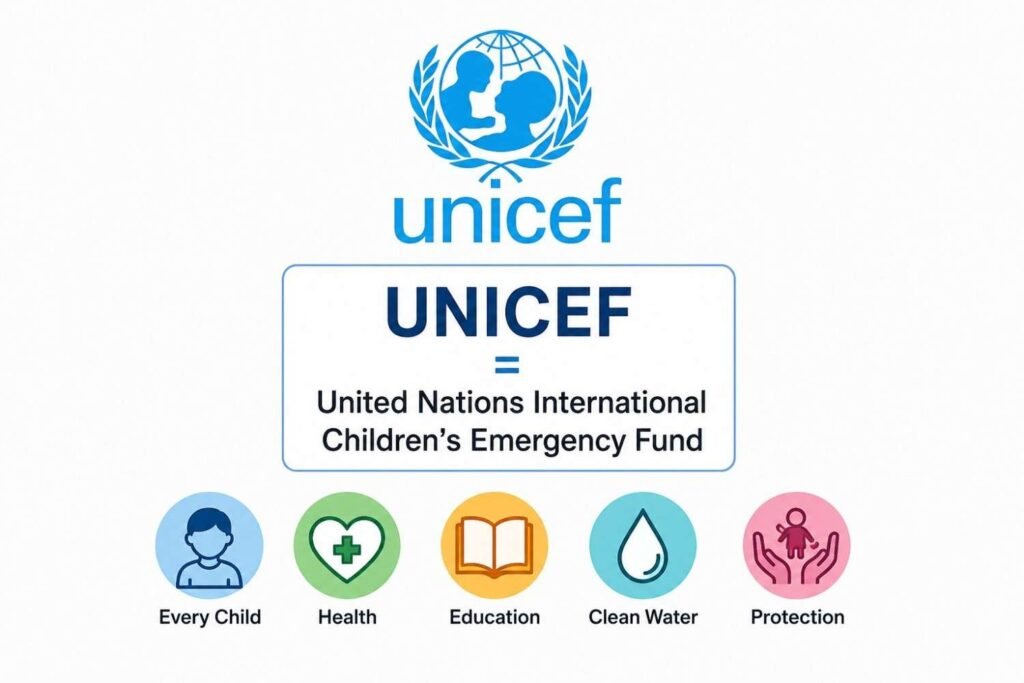
The UNICEF full form is United Nations International Children’s Emergency Fund.
Although the organization is now officially known simply as UNICEF, the original name remains widely recognized.
| Abbreviation | Full Form |
|---|---|
| UNICEF | United Nations International Children’s Emergency Fund |
Today, UNICEF works in more than 190 countries and territories to support children’s rights and well-being.
What Is UNICEF?
UNICEF is a specialized agency of the United Nations dedicated to helping children and mothers worldwide.
The organization focuses on:
Child protection
Healthcare
Nutrition
Education
Clean water and sanitation
Emergency relief
Child rights advocacy
UNICEF believes that every child deserves a safe, healthy, and happy childhood regardless of nationality, religion, gender, or economic background.
History of UNICEF
UNICEF was established on 11 December 1946 by the United Nations.
Initially, its purpose was to provide emergency food and healthcare to children affected by World War II.
As global needs changed, UNICEF expanded its mission beyond emergency assistance and began supporting children’s development worldwide.
Key Milestones
| Year | Event |
|---|---|
| 1946 | UNICEF established by the United Nations |
| 1953 | Became a permanent part of the UN system |
| 1965 | Received the Nobel Peace Prize |
| 1989 | Supported implementation of the Convention on the Rights of the Child |
| Present | Works in more than 190 countries |
Headquarters of UNICEF
The headquarters of UNICEF is located in:
📍 New York City, United States
From its headquarters, UNICEF coordinates programs and initiatives around the world.
| Detail | Information |
|---|---|
| Headquarters | New York City |
| Country | United States |
| Founded | 1946 |
| Parent Organization | United Nations |
Why Was UNICEF Created?
After World War II, millions of children faced serious challenges such as:
Hunger
Malnutrition
Disease
Lack of education
Homelessness
The United Nations recognized the urgent need to help these children and created UNICEF to provide emergency assistance and long-term support.
Over time, UNICEF evolved into a global organization focused on improving children’s lives everywhere.
Objectives of UNICEF
UNICEF works with governments, communities, and international organizations to achieve several important goals.
1. Protect Children’s Rights
UNICEF promotes and safeguards the rights of children worldwide.
2. Improve Child Health
The organization helps children receive proper healthcare and vaccinations.
3. Promote Education
UNICEF supports quality education for every child.
4. Reduce Child Mortality
It works to prevent diseases and improve survival rates among infants and young children.
5. Improve Nutrition
UNICEF fights malnutrition and promotes healthy growth.
6. Ensure Clean Water
The organization provides access to safe drinking water and sanitation facilities.
7. Support Children During Emergencies
UNICEF responds to natural disasters, conflicts, and humanitarian crises.
Main Functions of UNICEF
UNICEF performs several important functions around the world.
Healthcare Support
The organization provides vaccines, medicines, and healthcare services.
Examples
Immunization campaigns
Maternal healthcare
Disease prevention programs
Education Programs
UNICEF helps children access schools and quality learning opportunities.
Focus Areas
Primary education
Girls’ education
Digital learning
Teacher training
Nutrition Programs
Proper nutrition is essential for child development.
UNICEF works to:
Prevent malnutrition
Promote breastfeeding
Provide nutritional supplements
Support healthy diets
Water and Sanitation
Millions of children lack access to safe drinking water.
UNICEF helps communities by:
Building water systems
Improving sanitation facilities
Promoting hygiene education
Child Protection
UNICEF protects children from:
Child labor
Human trafficking
Violence
Abuse
Exploitation
Emergency Relief
During disasters and conflicts, UNICEF provides:
Food
Water
Shelter
Medical care
Educational support
UNICEF’s Role in India
UNICEF has been working in India since 1949.
The organization collaborates with governments and local communities to improve the lives of children and women.
Key Areas of Work in India
Child health
Immunization
Nutrition
Education
Water and sanitation
Adolescent development
Child protection
UNICEF supports various initiatives that help improve the quality of life for millions of children across India.
UNICEF and Child Rights
One of UNICEF’s most important responsibilities is protecting children’s rights.
According to UNICEF, every child has the right to:
Survival
Development
Protection
Participation
These rights are supported through the Convention on the Rights of the Child (CRC), adopted by the United Nations in 1989.
Achievements of UNICEF
Over the decades, UNICEF has achieved remarkable success worldwide.
Reduction in Child Mortality
Millions of children’s lives have been saved through immunization and healthcare programs.
Increased School Enrollment
UNICEF has helped more children access education.
Improved Nutrition
Programs have reduced malnutrition rates in many countries.
Better Access to Water
Millions now have access to safe drinking water.
Emergency Response Success
UNICEF provides life-saving support during disasters and humanitarian crises.
Importance of UNICEF in Today’s World
UNICEF remains highly relevant because many children still face challenges such as:
Poverty
Hunger
Lack of education
Disease
Conflict
Climate-related disasters
The organization continues to work toward creating a safer and healthier future for children worldwide.
UNICEF and Sustainable Development Goals (SDGs)
UNICEF supports the United Nations Sustainable Development Goals.
Some of the most relevant SDGs include:
| SDG | Goal |
|---|---|
| SDG 1 | No Poverty |
| SDG 2 | Zero Hunger |
| SDG 3 | Good Health and Well-being |
| SDG 4 | Quality Education |
| SDG 5 | Gender Equality |
| SDG 6 | Clean Water and Sanitation |
Through its programs, UNICEF contributes significantly to achieving these global goals.
UNICEF Awards and Recognition
UNICEF has received global recognition for its humanitarian work.
Nobel Peace Prize
In 1965, UNICEF received the Nobel Peace Prize for promoting peace and improving the welfare of children worldwide.
This award recognized the organization’s extraordinary efforts to help vulnerable children.
Interesting Facts About UNICEF
Here are some fascinating facts students should know:
UNICEF was founded in 1946.
It works in over 190 countries and territories.
Its headquarters is in New York City.
UNICEF received the Nobel Peace Prize in 1965.
The organization focuses on children’s rights and welfare.
UNICEF supports millions of children every year.
It operates under the United Nations system.
Career Opportunities at UNICEF
Students interested in international development and humanitarian work may consider careers related to UNICEF.
Popular Career Areas
Child protection
Public health
Education
Nutrition
Communication
Social policy
Human rights
Program management
Working with UNICEF offers opportunities to make a positive impact on society.
UNICEF Full Form in Exams
Questions about UNICEF frequently appear in:
School examinations
General knowledge tests
UPSC examinations
SSC examinations
Banking exams
State-level competitive exams
Sample Question
Q. What is the full form of UNICEF?
Answer: United Nations International Children’s Emergency Fund.
Frequently Asked Questions (FAQs)
What is the UNICEF full form?
UNICEF stands for United Nations International Children’s Emergency Fund.
When was UNICEF established?
UNICEF was established on 11 December 1946.
Where is UNICEF headquartered?
UNICEF’s headquarters is located in New York City, United States.
What is the main purpose of UNICEF?
Its main purpose is to protect children’s rights and improve their health, education, nutrition, and overall well-being.
Does UNICEF work in India?
Yes, UNICEF has been working in India since 1949.
Why is UNICEF important?
UNICEF helps millions of children by providing healthcare, education, nutrition, protection, and emergency assistance.
Conclusion
The UNICEF full form is United Nations International Children’s Emergency Fund. It is one of the most important organizations in the world dedicated to improving the lives of children and protecting their rights.
From healthcare and education to nutrition and emergency relief, UNICEF has played a vital role in creating a better future for millions of children. For students, understanding UNICEF is important not only for examinations but also for developing awareness about global humanitarian efforts.
As the world continues to face challenges such as poverty, conflict, and climate change, UNICEF’s mission remains as important as ever—ensuring that every child gets the opportunity to survive, learn, grow, and thrive.