Table of Contents
BSc Full Form – What Is BSc, Course Details, Fees, Duration & Top Colleges (2026–27)
Quick Summary: Wondering about BSc full form, what the course involves, how long it takes, how much it costs, and which are the top colleges? You’re in exactly the right place! This complete guide to BSc course details covers everything a Class 12 student needs to know — from eligibility and BSc fees to specialisations, entrance exams, top colleges, salary, and career scope. Let’s get started! 🔬
1. BSc Full Form – What Does BSc Stand For?
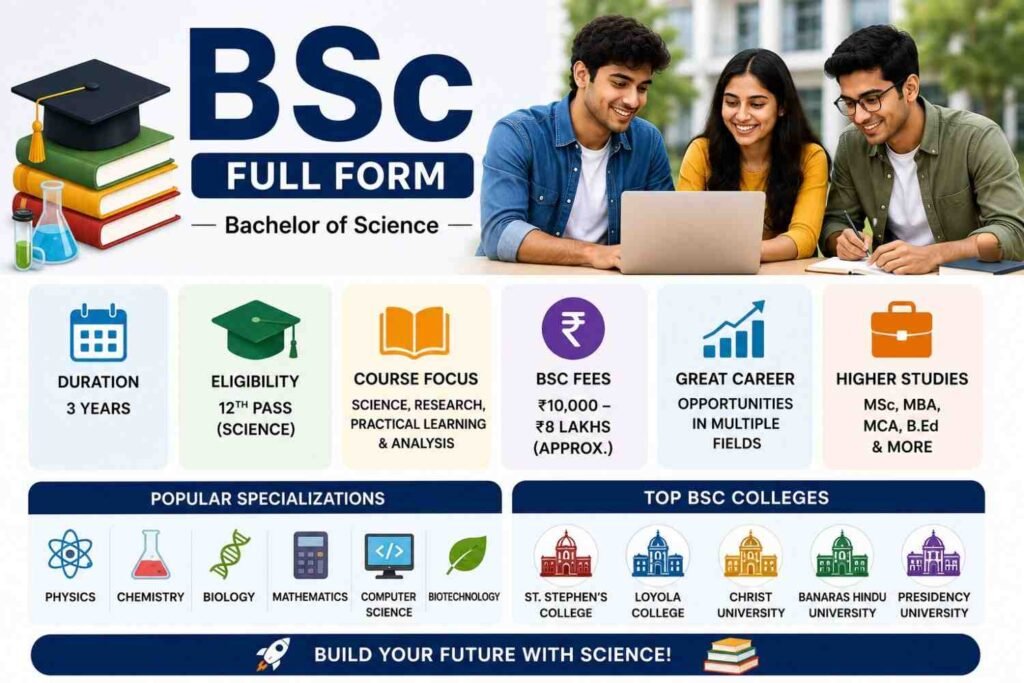
Let’s start at the very beginning — BSc full form is Bachelor of Science.
That’s it! BSc stands for Bachelor of Science — one of the most popular and widely respected undergraduate degree programmes in India and around the world. Whether you want to become a researcher, a data scientist, a doctor, an IT professional, or a pharmaceutical expert, the BSc degree is your academic foundation.
BSc full form is Bachelor of Science, it is an undergraduate degree programme of three years duration, spread across six semesters. In India, more than 10,900 educational institutes offer the BSc course, out of which the majority are private institutes. The course provides a strong foundation of scientific principles and concepts.
2. What Is BSc? (Simple, Clear Explanation)
So what is BSc exactly — and why do hundreds of thousands of students choose it every single year?
BSc course is a 3-year undergraduate program that focuses on subjects related to science and technology. It is one of the most popular choices for students who have completed their 12th grade in the science stream, with mandatory subjects like Physics, Chemistry, Biology, or Mathematics. The BSc course syllabus focuses on core scientific disciplines like Physics, Chemistry, Mathematics, and Biology, including subjects like Quantum mechanics, Analytical Chemistry, and Calculus. It offers an in-depth exploration of scientific principles and their applications across various disciplines.
In the simplest terms: BSc teaches you how the natural world works — from the physics of the universe to the chemistry of medicines, from the mathematics of algorithms to the biology of living organisms. And then it shows you how to apply that knowledge to real-world careers and research.
BSc stands for Bachelor of Science. It is a three-year undergraduate degree typically divided into six semesters. The program focuses on developing analytical, technical, and research skills through theoretical study and practical lab work. It involves theoretical learning of in-depth concepts, as well as practical experience through laboratory experiments.
Why is BSc so powerful in 2025–26?
India has over 5,800 BSc colleges, with 90+ ranking in the top tier by NIRF 2025, offering diverse career paths for BSc graduates. As of 2026, BSc graduates can explore over 50 career paths, with average starting salaries ranging from ₹2.5–6 LPA across various specialisations.
The demand for skilled science graduates is growing rapidly across healthcare, IT, research, pharmaceuticals, data science, and environmental sectors. And with new specialisations like BSc AI, BSc Data Science, and BSc Forensic Science now available, BSc has evolved far beyond traditional Physics-Chemistry-Maths.
3. BSc Course Details – At a Glance
Here’s your complete snapshot of BSc course details:
| Feature | Details |
|---|---|
| BSc Full Form | Bachelor of Science |
| Degree Level | Undergraduate (UG) |
| BSc Course Duration | 3 Years (6 Semesters) |
| Eligibility | Class 12 (Science stream) with min. 50–60% marks |
| Stream Required | PCM or PCB (Science) |
| BSc Fees (Government) | ₹3,370 – ₹50,000/year |
| BSc Fees (Private) | ₹25,000 – ₹5,84,000/year |
| Admission Mode | Merit-Based / Entrance Exam (CUET, JEE, etc.) |
| Top Specialisations | Computer Science, Biotechnology, Physics, Maths, Data Science, Forensic Science |
| Average Salary | ₹2.5 – 6 LPA (freshers); ₹8–12 LPA (IISc graduates) |
| Highest Package | ₹52 LPA (IISc Bangalore, 2025) |
| Top Recruiters | Google, Infosys, Cipla, TCS, Accenture, Reliance, HCL |
| Further Study Options | MSc, MCA, MBA, B.Ed, MTech, PhD |
| Total Colleges in India | 10,900+ |
4. Who Should Choose BSc After 12th?
Before choosing your course, the most honest question is — is BSc right for you?
Choose BSc if:
✅ You’re genuinely curious about science, research, or how natural systems work ✅ You studied PCM (Physics, Chemistry, Maths) or PCB (Physics, Chemistry, Biology) in Class 12 ✅ You want to pursue higher education like MSc, MCA, or PhD in a science field ✅ You want a career in healthcare, pharmaceuticals, IT, research, or data science ✅ You’re interested in becoming a scientist, researcher, doctor, or science teacher ✅ You want an affordable yet prestigious degree from a top government college
Think twice if:
- You have no interest in science or lab work
- You want a purely management or business career (BBA or BMS might suit you better)
- You want to jump directly into software development (BCA is faster for that)
- You want to become a lawyer or pursue humanities (BA or BBA + LLB are better routes)
The BSc job scope is vast, as a graduate can find employment opportunities in core science industries and other research-based industries. BSc graduates primarily work as Scientists, Research Scholars, Specialists, and R&D Industry Experts.
5. BSc Eligibility Criteria 2025–26
Here are the standard BSc eligibility criteria for admission in 2025–26:
Academic Qualification
The candidate should have completed 10+2 examinations with Mathematics, Physics, Chemistry, and Biology with a minimum of 50% marks for general category and 45% marks for reserved category students.
- Class 12 pass from a recognised board (CBSE, ICSE, State Boards) in the Science stream
- Minimum aggregate: 50–60% in Class 12 (General category); 45% for SC/ST/OBC
- PCM stream (Physics, Chemistry, Maths) for BSc Maths, Physics, CS, IT, Data Science
- PCB stream (Physics, Chemistry, Biology) for BSc Biology, Biotechnology, Zoology, Botany, Microbiology
Subject-Specific Requirements
- BSc Computer Science / Data Science / IT: PCM preferred; Maths is mandatory at most colleges
- BSc Biotechnology / Microbiology: PCB or PCM both accepted at most colleges
- BSc Nursing / Agriculture: PCB mandatory
- BSc Physics / Mathematics: PCM mandatory
Age Limit
The minimum age limit to enrol in the course is 17–18 years. There is no upper age limit for the BSc programme.
💡 Tip: Candidates who have successfully passed their 10+2 with 50–60% in the PCM (Physics/Chemistry/Mathematics) or PCB (Physics/Chemistry/Biology) stream are eligible to apply for the BSc course. For most government colleges, 50% is the minimum — but top colleges like Miranda House (Delhi University) or Loyola College (Chennai) have cutoffs of 90%+ for some BSc programmes.
6. BSc Course Duration – How Many Years?
The standard BSc course duration is 3 years, divided into 6 semesters.
BSc is a 3-year Undergraduate-level course. The BSc course duration is 3 to 4 years — 3 years for the regular BSc, and 4 years for the BSc (Honours with Research) format introduced by some universities under the National Education Policy (NEP) 2020.
Semester-by-Semester Breakdown
The 3-year, 6-semester structure works like this:
- Year 1 (Semesters 1 & 2): Foundation subjects — core science, mathematics, communication
- Year 2 (Semesters 3 & 4): Core subject depth — advanced theory and lab work
- Year 3 (Semesters 5 & 6): Specialisation, electives, and major project/dissertation
NEP 2020 – New Format (4-Year BSc Honours with Research)
Under the National Education Policy (NEP) 2020, many universities now offer a 4-year BSc (Honours with Research) programme that includes a research dissertation in Year 4. Students who complete 4 years with a research component receive the BSc (Honours with Research) degree, which makes them directly eligible for PhD admission without requiring a separate Master’s degree.
7. Types of BSc Programmes
Not all BSc courses are the same! Here’s the full range of options available:
| Type | Duration | Description |
|---|---|---|
| BSc (General / Pass) | 3 Years | Broad science education across 2–3 subjects |
| BSc (Honours / Hons) | 3 Years | Deep specialisation in one subject (e.g., BSc Hons in Physics) |
| BSc (Honours with Research) | 4 Years | NEP 2020 format with research dissertation in Year 4 |
| BSc (Integrated / BS+MS) | 5 Years | Combined UG + PG (IISERs, IITs) — joins after 12th |
| BSc (Distance / Online) | 3 Years | For working students or those needing flexibility |
| BSc (Vocational) | 3 Years | Skill-based BSc with industry-specific training |
💡 IISERs and IITs: The 5-year integrated BS + MS programme at IISERs (Indian Institutes of Science Education and Research) and select IITs is considered among India’s most prestigious undergraduate science education paths. Entry is through JEE Advanced or IISER Aptitude Test (IAT).
8. BSc Fees in India – Government vs Private Colleges
BSc fees vary enormously across colleges. Here’s the complete picture:
BSc Fees by College Type
BSc course fees range from Rs. 3,370 to Rs. 5.84 Lakhs per year depending on the college and specialisation.
| College Type | Annual Fees | Total 3-Year Fees |
|---|---|---|
| Government / Heritage Colleges | ₹3,370 – ₹50,000/year | ₹10,000 – ₹1.5 Lakh |
| Mid-Range Private Colleges | ₹25,000 – ₹1,00,000/year | ₹75,000 – ₹3 Lakh |
| Premium Private Universities | ₹1,00,000 – ₹5,84,000/year | ₹3 Lakh – ₹17.5 Lakh |
| Distance / Online BSc | ₹5,000 – ₹30,000/year | ₹15,000 – ₹90,000 |
City-Wise BSc Fee Examples
- Bangalore: BSc course fee is between INR 21,095 to INR 89,300 per year in government colleges to INR 53,910 to INR 5.7 lakhs in private universities
- Pune: Average BSc course fee is between INR 2,700 and INR 20,000 per year in government colleges, and INR 14,850–1.65 lakhs in private universities
- Chennai: Private Colleges charge anything between INR 25,000–1,00,000 annually, depending on specialisation and college
Notable Fee Examples
- Miranda House, New Delhi (DU): ₹17,000/year — one of the best BSc colleges in India at an almost unbelievably low fee
- Loyola College, Chennai: ₹7,000/year — legendary South Indian BSc college at minimal cost
- St. Xavier’s College, Mumbai: ₹6,000–7,000/year — premium education at government-level fees
- IISc Bangalore (BS programme): Highly subsidised with scholarships available; highest package ₹52 LPA
🏆 Best Value BSc Education: Government colleges under Delhi University (Miranda House, Sri Venkateswara College, Daulat Ram College) offer world-class BSc education for ₹15,000–30,000 total. Loyola College Chennai and St. Xavier’s Mumbai are similarly exceptional. These are the ROI champions of BSc education in India.
9. BSc Specialisations – The Complete List
One of the most exciting aspects of the BSc degree is the sheer variety of specialisations available. Private colleges are particularly beneficial for students interested in niche specialisations like BSc in Data Science, Forensic Science, Environmental Studies, and Artificial Intelligence, which may not be widely available in public universities.
Traditional Core Specialisations
| Specialisation | Best For |
|---|---|
| BSc Physics | Research, engineering applications, teaching |
| BSc Chemistry | Pharmaceuticals, research, chemical industry |
| BSc Mathematics | Data science, finance, academia, statistics |
| BSc Biology / Zoology / Botany | Ecology, teaching, research, wildlife |
| BSc Computer Science | IT, software, data science (without engineering) |
| BSc Electronics | Hardware, telecommunications, embedded systems |
Modern & High-Demand Specialisations (2025–26)
| Specialisation | Career Paths | Salary Potential |
|---|---|---|
| BSc Data Science | Data Analyst, ML Engineer, BI Specialist | ₹5 – 15 LPA |
| BSc Artificial Intelligence | AI Developer, ML Engineer, NLP Researcher | ₹6 – 20 LPA |
| BSc Cybersecurity | Security Analyst, Ethical Hacker | ₹5 – 15 LPA |
| BSc Biotechnology | Research, pharma, biotech companies | ₹3 – 8 LPA |
| BSc Forensic Science | Crime labs, investigation, legal sector | ₹3 – 8 LPA |
| BSc Nutrition & Dietetics | Healthcare, hospitals, wellness industry | ₹3 – 7 LPA |
| BSc Environmental Science | Conservation, policy, sustainability sector | ₹3 – 7 LPA |
| BSc Agriculture | Agri-business, research, government extension | ₹3 – 8 LPA |
| BSc Nursing | Hospitals, healthcare, global demand | ₹3 – 8 LPA |
| BSc Psychology | Counselling, HR, mental health, research | ₹3 – 7 LPA |
💡 Trending Pick for 2025–26: Bangalore’s most demanded BSc specialisations are BSc in Computer Applications, BSc Physics, BSc Agriculture, and BSc Forensic Science. Nationally, BSc Data Science and BSc AI are the fastest-growing new specialisations. If you want the highest salary potential from a BSc, these are your best bets.
10. BSc Syllabus – Semester-Wise Overview
The BSc syllabus varies by specialisation, but here’s a general semester-wise structure for the most popular choices:
BSc (Computer Science) – Semester Overview
Year 1: Introduction to Computing, Programming in C/Python, Mathematics I & II, Digital Electronics Year 2: Data Structures, DBMS, Operating Systems, Computer Networks, Object-Oriented Programming (Java) Year 3: Software Engineering, Web Development, Cloud Computing/AI (Elective), Mini Project, Major Project
BSc (Physics) – Semester Overview
Year 1: Mechanics, Electrostatics, Mathematical Physics, Lab I Year 2: Thermodynamics, Optics, Quantum Mechanics basics, Lab II Year 3: Solid State Physics, Nuclear Physics, Electronics, Special Lab, Research Project
BSc (Biotechnology) – Semester Overview
Year 1: Cell Biology, Biochemistry, Genetics, Microbiology basics, Lab I Year 2: Molecular Biology, Immunology, Fermentation Technology, Bioinformatics, Lab II Year 3: Genetic Engineering, Industrial Biotechnology, Environmental Biotechnology, Research Project
All BSc programmes include a mix of:
- Theory lectures — conceptual understanding
- Practical lab sessions — hands-on experimental skills
- Internal assessments — assignments, quizzes, viva, lab records
- Semester-end examinations — theory + practical exams
- Final year project / dissertation — independent research or industry internship
11. BSc Admission Process & Entrance Exams
BSc Admissions 2025 are done on the basis of merit as well as on the basis of entrance exams. Top colleges like Mumbai University and Madras Christian College take admission based on marks obtained in Class 12. Universities and colleges like Delhi University, IIT Madras, IGNOU, and Chandigarh University conduct their own entrance exams for BSc admission. CUET is one of the popular entrance exams that is accepted by the majority of public and private universities in India.
Key BSc Entrance Exams
| Entrance Exam | Conducted By | Colleges Accepting |
|---|---|---|
| CUET UG | NTA | Central & state universities, DU |
| IPU CET | IP University | IP University affiliated colleges, Delhi |
| LPU NEST | LPU | Lovely Professional University |
| NPAT | NMIMS | Narsee Monjee University |
| IISER Aptitude Test (IAT) | IISERs | IISERs (5-year integrated BS+MS) |
| JEE Main | NTA | Select IITs (integrated BSc programmes) |
| KCET | Karnataka | Karnataka government colleges |
| MHT CET | Maharashtra | Maharashtra colleges |
| State CETs | Respective states | State college admissions |
Step-by-Step Admission Process
- Check eligibility — Class 12 Science stream with 50–60% marks
- Register for entrance exam (CUET / university-specific CET / JEE)
- Appear for exam — science subjects + general test
- Check merit lists / cutoffs on college websites
- Fill choice/preference form during counselling
- Document verification and seat confirmation
- Pay fees and secure admission
12. Top BSc Colleges in India 2025–26
India has over 10,900 colleges offering BSc — here are the absolute best across regions:
Tier 1 – Premium Government / Heritage Colleges
| College | Location | Annual BSc Fees | Known For |
|---|---|---|---|
| Indian Institute of Science (IISc) | Bangalore | Highly subsidised | #1 research university; highest package ₹52 LPA |
| Miranda House (Delhi University) | New Delhi | ~₹17,000/year | Consistently #1 in NIRF women’s colleges |
| Loyola College | Chennai | ~₹7,000/year | Top-ranked science college in South India |
| St. Xavier’s College | Mumbai | ~₹6,000–7,000/year | Heritage institution, strong science programmes |
| Madras Christian College (MCC) | Chennai | ~₹15,000–30,000/year | Excellent BSc Biotechnology & Chemistry |
| Sri Venkateswara College (DU) | New Delhi | ~₹13,000–14,000/year | Top DU science college |
| Presidency College | Kolkata | ~₹5,000–10,000/year | Historic excellence in pure sciences |
| Fergusson College | Pune | Low government fees | Pune’s top BSc college under SPPU |
Tier 2 – Strong Private Universities
| College | Location | Annual Fees | Known For |
|---|---|---|---|
| Christ University | Bangalore | ₹80,000–2,00,000 | Modern curriculum, good placements |
| Kristu Jayanti College | Bangalore | ₹60,000–1,50,000 | Industry-oriented, NIRF-ranked |
| Symbiosis International (SICSR) | Pune | ₹1,00,000–2,00,000 | Data Science, CS specialisations |
| Amity University | Noida / Multiple | ₹1,00,000–2,50,000 | Large campus, diverse specialisations |
| VIT Chennai | Chennai | ₹1,50,000–3,00,000 | Strong IT/tech placement network |
| LPU | Punjab | ₹80,000–2,00,000 | 300+ recruiters, massive campus |
| Chandigarh University | Chandigarh | ₹80,000–1,80,000 | Good placements, modern labs |
🏆 Best Value Pick Nationally: Miranda House (Delhi) at ₹17,000/year with NIRF national rankings is the unbeatable value champion. St. Xavier’s Mumbai and Loyola Chennai at under ₹10,000/year come close second. For premium private education, Christ University Bangalore and VIT Chennai offer the best combination of curriculum and placement support.
13. Jobs & Career Scope After BSc
BSc graduates can explore over 50 career paths with average starting salaries ranging from ₹2.5–6 LPA across various specialisations. The job market for BSc graduates in 2026 is dynamic, driven by significant growth in IT, healthcare, and research sectors.
Top Job Roles for BSc Graduates
BSc career options include Chemist, Enumerator, Researcher, Clinical Research Associate, Lab Technician, Research Analyst, Teacher, Lecturer, and Biostatistician.
| Job Role | Sector | Salary Range |
|---|---|---|
| Software Developer (BSc CS) | IT | ₹4 – 10 LPA |
| Data Analyst | Tech, Finance | ₹4 – 10 LPA |
| Research Scientist | Pharma, Biotech | ₹4 – 10 LPA |
| Lab Technician / Analyst | Healthcare, Pharma | ₹3 – 6 LPA |
| Clinical Research Associate | Pharma, CROs | ₹4 – 8 LPA |
| Biostatistician | Healthcare, Research | ₹5 – 10 LPA |
| Science Teacher / Lecturer | Education | ₹3 – 8 LPA |
| Environmental Scientist | Government, NGOs | ₹3 – 7 LPA |
| Forensic Scientist | Government labs | ₹3 – 7 LPA |
| Cybersecurity Analyst (BSc CS) | IT, Defence | ₹5 – 15 LPA |
Top BSc Recruiters
Top recruiters like Reliance Industries Limited, Accenture, and Microsoft are actively hiring across various scientific and technical domains. Other major BSc recruiters include Google, Glenmark Pharmaceuticals, Infosys, Cipla, L&T Infotech, Capgemini, TCS, Amazon, and HCL Technologies.
14. BSc Salary in India – What to Expect
Here’s the honest salary picture after completing your BSc degree:
The average BSc graduate salary in India is in the range of INR 3–7 LPA. The BSc average salary is Rs. 8.9 LPA specifically for Scientist roles.
Salary by Specialisation and Experience
| Specialisation | Fresher Salary | Mid-Level (3–5 yrs) |
|---|---|---|
| BSc Data Science / AI | ₹4 – 8 LPA | ₹8 – 15 LPA |
| BSc Computer Science | ₹3.5 – 7 LPA | ₹7 – 12 LPA |
| BSc Biotechnology | ₹3 – 6 LPA | ₹6 – 12 LPA |
| BSc Chemistry / Pharma | ₹3 – 5 LPA | ₹5 – 10 LPA |
| BSc Physics | ₹3 – 5 LPA | ₹5 – 10 LPA |
| BSc Forensic Science | ₹3 – 5 LPA | ₹5 – 9 LPA |
| BSc Nursing | ₹3 – 6 LPA | ₹5 – 10 LPA |
Top-End Salary Potential
IISc Bangalore reported an average package of ₹9.09 LPA and a highest package of ₹52 LPA in 2025.
For BSc Economics graduates from top-tier colleges: an average package of ₹4.60 LPA (2025 batch). With specialised skills and postgraduate qualifications, salaries can reach ₹10–20 LPA and beyond.
15. What to Do After BSc – Higher Education Options
BSc is a strong foundation — and your options for further education are rich and diverse:
Option 1: MSc (Master of Science) — Most Natural Progression
Deepens expertise in your BSc specialisation. Opens doors to research, academia, and senior positions in pharma, biotech, and science industries.
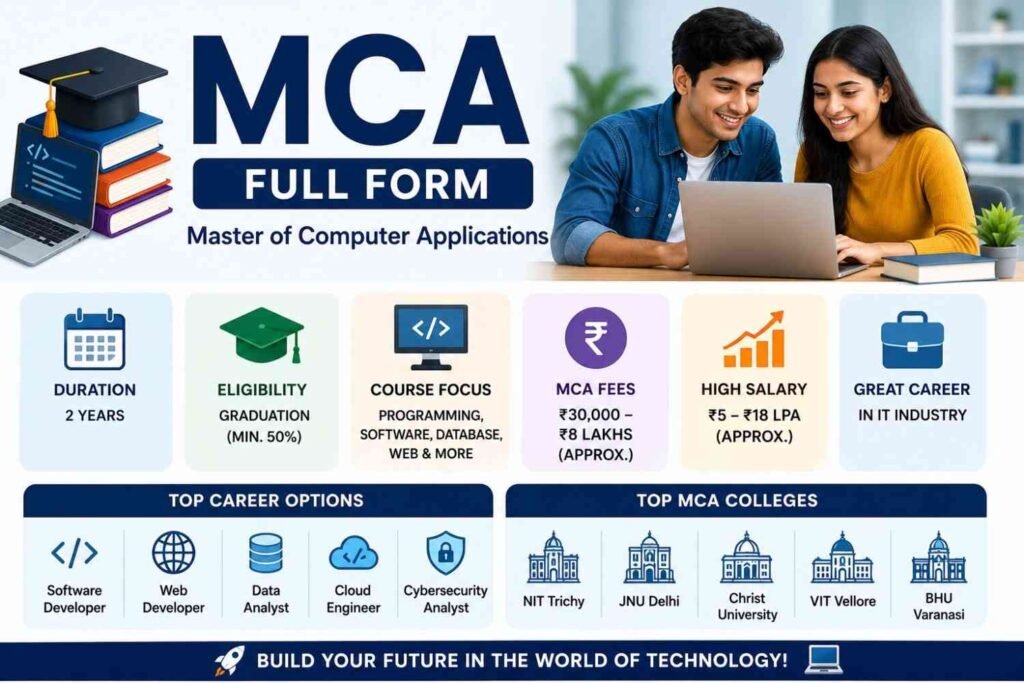
Option 2: MCA (Master of Computer Applications)
For BSc Computer Science or Mathematics graduates — a 2-year MCA via NIMCET opens doors to NIT placements at ₹7–15 LPA.
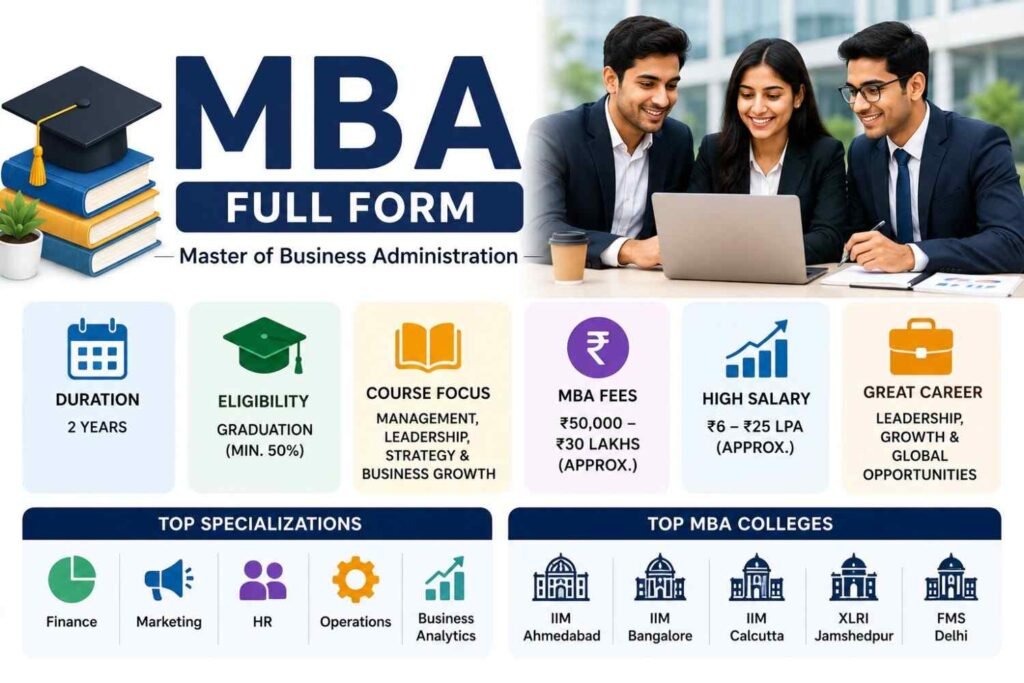
Option 3: MBA
Combining BSc with an MBA is a powerful combination — especially for BSc Biotechnology + MBA in Pharma Marketing, or BSc CS + MBA in Product Management. Salary jump to ₹10–25 LPA.
Option 4: B.Ed (Bachelor of Education)
For students who want to become school teachers. After BSc + B.Ed, you can teach science at secondary/senior secondary level as a TGT/PGT.
Option 5: PhD / Research
After MSc, the most academically passionate BSc graduates pursue a PhD in their specialisation. Research positions at universities, DST, DRDO, CSIR, and ISRO are highly prestigious.
Option 6: Professional Certifications
AWS (Cloud), Google Data Analytics, Coursera Data Science, GATE (for PSU jobs and MTech), UPSC (for civil services) — BSc graduates are eligible for all these pathways.
16. Frequently Asked Questions (FAQs)
Q1. What is BSc full form? BSc full form is Bachelor of Science — a 3-year undergraduate programme focused on scientific disciplines. BSc involves theoretical learning of in-depth concepts, as well as practical experience through laboratory experiments.
Q2. What is BSc course duration? BSc course duration is 3 years (6 semesters) for the standard programme. Under NEP 2020, some universities now offer a 4-year BSc (Honours with Research) programme.
Q3. What are BSc fees in India? BSc course fees range from Rs. 3,370 to Rs. 5.84 Lakhs per year. Government colleges charge ₹3,370–50,000 per year. Top private universities charge ₹25,000–5,84,000 per year.
Q4. Who is eligible for BSc after 12th? Candidates must have completed Class 12 from a recognised board in the Science stream (PCM or PCB) with a minimum of 50% marks (45% for reserved categories).
Q5. What is the salary after BSc? The average BSc graduate salary in India is in the range of INR 3–7 LPA. With in-demand specialisations like Data Science or AI, freshers can earn ₹4–8 LPA. IISc Bangalore’s highest placement was ₹52 LPA in 2025.
Q6. Which are the top BSc colleges in India? Top BSc colleges include IISc Bangalore, Miranda House (Delhi), Loyola College (Chennai), St. Xavier’s College (Mumbai), Madras Christian College (Chennai), Christ University (Bangalore), and Fergusson College (Pune).
Q7. What is the best BSc specialisation in 2025–26? BSc Data Science, BSc Artificial Intelligence, BSc Computer Science, and BSc Biotechnology are among the highest-demand and highest-paying specialisations. BSc Forensic Science and BSc Cybersecurity are also rapidly growing.
Q8. Can I do MBA after BSc? Absolutely! BSc graduates can appear in CAT, XAT, MAT, or CMAT for MBA admissions. The BSc + MBA combination is particularly powerful for careers in pharmaceuticals, IT management, data analytics, and consulting.
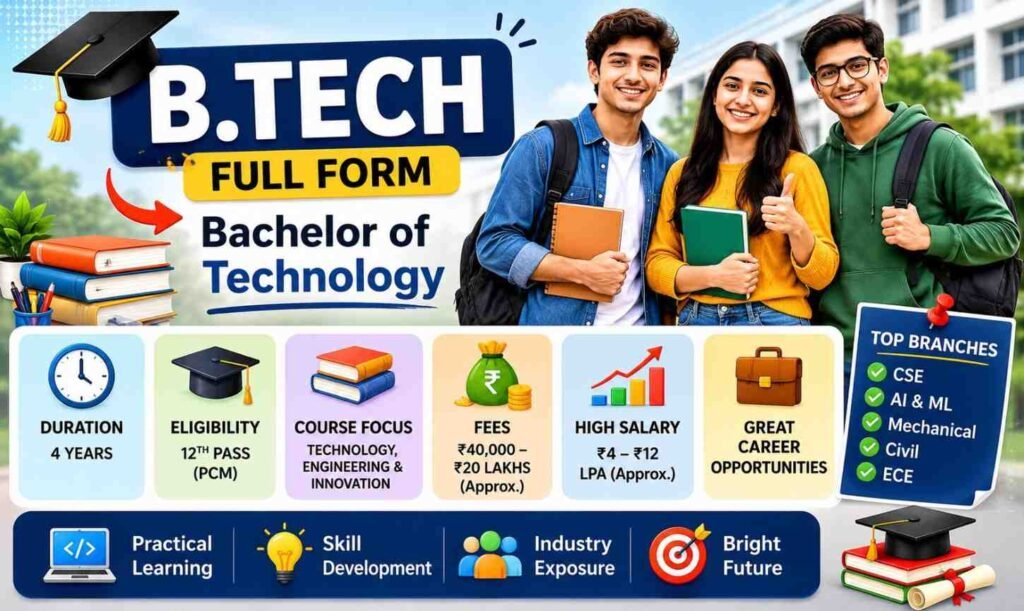
Q9. Is BSc or B.Tech better? It depends on your goals. BSc is more research-oriented, more affordable, and covers pure science. B.Tech is engineering-focused, industry-oriented, and typically commands a higher starting salary. If you want to go into research or academia, BSc is excellent. If you want core engineering industry roles, B.Tech is better.
Q10. What is the scope of BSc in government jobs? BSc graduates are eligible for a wide range of government jobs — UPSC Civil Services, SSC CGL, DRDO (research posts), CSIR, ISRO (scientist posts), teaching positions (TGT/PGT after B.Ed), GATE for PSUs, and banking exams (SBI PO, RBI Grade B).
Q11. How many colleges offer BSc in India? In India, more than 10,900 educational institutes offer the BSc course, out of which the majority are private institutes.
Q12. Can Arts or Commerce students do BSc? No — BSc requires a Science stream background (PCM or PCB) in Class 12. However, BSc Computer Applications or BSc Data Science at some private colleges may accept Commerce students with Mathematics.
Final Thoughts
And there you have it — your complete guide to BSc full form, course details, fees, specialisations, top colleges, and career scope for 2025–26! 🎉
Here’s your quick recap:
- BSc full form = Bachelor of Science — a 3-year undergraduate degree divided into 6 semesters
- Requires Science stream (PCM or PCB) in Class 12 with 50% minimum marks
- BSc fees: ₹10,000 total (government colleges) to ₹17.5 Lakh (premium private)
- Over 50 specialisations available — from Physics and Chemistry to Data Science, AI, and Forensic Science
- Salary after BSc: ₹3–7 LPA for most freshers; up to ₹52 LPA at IISc
- Top colleges: IISc, Miranda House, Loyola Chennai, St. Xavier’s Mumbai, Christ University Bangalore
- Best next step: MSc, MCA, MBA, or certifications depending on your career goal
BSc is not just a “fallback option” — it’s a genuinely powerful degree that leads to exceptional careers in research, healthcare, IT, data science, pharmaceuticals, and education. The key is choosing the right specialisation for 2025–26, getting into the best college you can, and building skills and experience alongside your degree.
The science world is waiting for you. Go explore it! 🔬💪