
OST Full Form: Meaning, Uses, Types, and Career Opportunities
What is the OST Full Form?
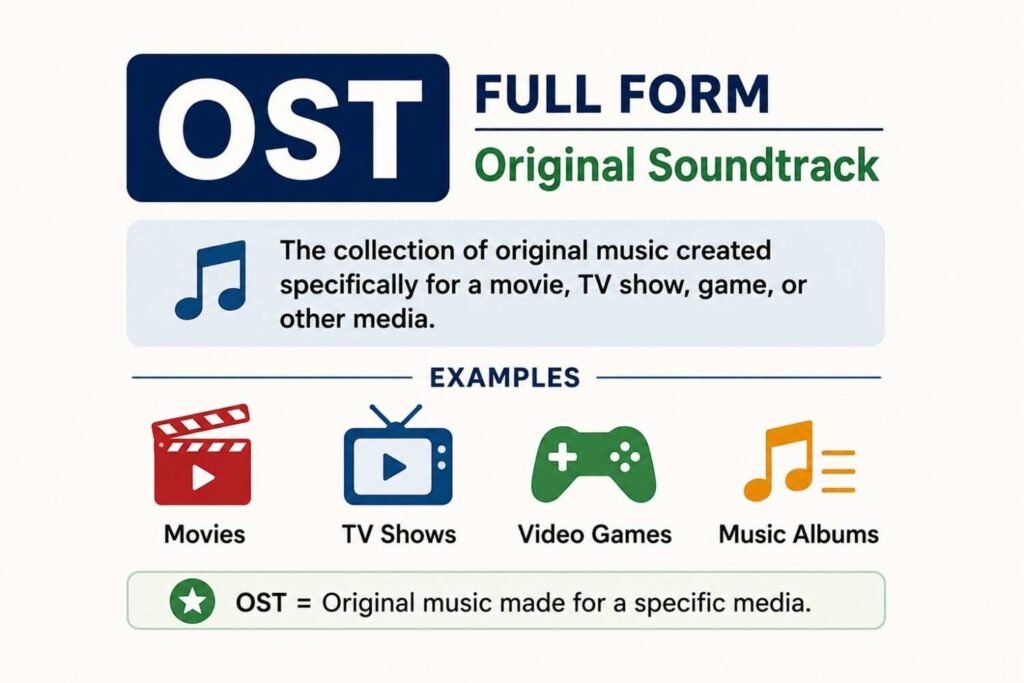
The OST full form is Original Sound Track. It refers to the collection of music, songs, background scores, and audio tracks that are specifically created or used for a movie, television show, web series, video game, or other multimedia production.
When you hear a memorable song from a movie or an emotional background score during a dramatic scene, it is often part of the OST.
For Class 12 students interested in music, films, entertainment, gaming, or media studies, understanding the OST full form is useful because OSTs play a major role in enhancing storytelling and audience engagement.
Introduction to OST
Music is one of the most powerful elements in entertainment. It creates emotions, builds suspense, and makes scenes memorable.
The term Original Sound Track (OST) refers to all the original music associated with a particular production. This may include:
Theme songs
Background music
Instrumental scores
Sound effects
Movie songs
Video game music
OSTs often become as popular as the films or games they accompany.
Definition of OST
An Original Sound Track (OST) is the official collection of audio recordings created specifically for a film, television series, web show, anime, drama, or video game.
These tracks are designed to support the story and enhance the overall experience for viewers and listeners.
Why is OST Important?
OSTs contribute significantly to the success of entertainment productions.
Creates Emotional Impact
Music helps audiences connect emotionally with scenes and characters.
Enhances Storytelling
Background scores support the narrative and create atmosphere.
Improves Audience Engagement
A good soundtrack keeps viewers interested and invested.
Builds Brand Identity
Many productions become recognizable through their iconic soundtracks.
Increases Popularity
Popular OSTs often gain millions of streams and downloads independently.
Components of an OST
An OST usually includes different types of audio content.
Theme Songs
These are signature songs associated with a movie or series.
Examples
Opening themes
Closing themes
Promotional songs
Background Score
Instrumental music played during scenes to create specific moods.
Functions
Creating suspense
Building excitement
Expressing emotions
Supporting dramatic moments
Instrumental Tracks
Music without lyrics that enhances the viewing experience.
Sound Effects
Special audio effects used to improve realism and immersion.
OST in Movies
Movies heavily rely on OSTs to strengthen storytelling.
Importance in Films
Enhances emotional scenes
Creates memorable moments
Establishes atmosphere
Supports character development
Many blockbuster films are remembered not only for their stories but also for their iconic soundtracks.
OST in Television Shows
Television series use OSTs to:
Introduce characters
Set the tone of episodes
Highlight dramatic moments
Build emotional connections
Popular TV show themes often become recognizable worldwide.
OST in Web Series
With the rise of streaming platforms, web series have increasingly invested in high-quality OSTs.
Benefits include:
Stronger audience engagement
Better storytelling
Enhanced production value
Increased popularity on music platforms
OST in Video Games
Video game OSTs have become a major part of the gaming industry.
Functions of Game OSTs
Improve immersion
Increase excitement
Guide player emotions
Enhance gameplay experiences
Some game soundtracks are so popular that they are performed in live concerts.
OST in Anime and Korean Dramas
The term OST is especially popular among fans of anime and Korean dramas.
Anime OSTs
Anime often features:
Opening songs
Ending songs
Character themes
Background scores
Korean Drama OSTs
K-drama OSTs frequently become chart-topping hits and contribute significantly to a show’s popularity.
Difference Between OST and Soundtrack
Students often use these terms interchangeably, but there are slight differences.
| Feature | OST | Soundtrack |
|---|---|---|
| Full Form | Original Sound Track | Soundtrack |
| Music Type | Original music created for production | Can include original and licensed music |
| Purpose | Supports specific production | General audio collection |
| Usage | Movies, games, dramas | Broader entertainment use |
In practice, both terms are often used similarly.
How OSTs Are Created
Creating an OST involves multiple professionals.
Step 1: Story Analysis
Music composers study the storyline and characters.
Step 2: Theme Development
Main musical themes are created.
Step 3: Composition
Original music is composed for various scenes.
Step 4: Recording
Musicians and singers record the tracks.
Step 5: Editing and Mixing
Audio engineers refine the recordings.
Step 6: Final Integration
The soundtrack is synchronized with the production.
Professionals Involved in OST Creation
Several experts contribute to an OST.
Music Composer
Creates original music.
Lyricist
Writes song lyrics.
Singer
Performs songs.
Music Producer
Oversees production and recording.
Sound Engineer
Handles audio quality and mixing.
Orchestra Musicians
Perform instrumental compositions.
Popular Genres of OST Music
OSTs can include many musical styles.
Romantic
Used for emotional and love scenes.
Action
Creates excitement and tension.
Drama
Supports serious storytelling.
Fantasy
Enhances magical and imaginative worlds.
Horror
Builds suspense and fear.
Adventure
Encourages excitement and exploration.
Benefits of OSTs
Strengthens Storytelling
Music enhances the narrative.
Creates Lasting Memories
Audiences often remember songs long after watching a production.
Generates Additional Revenue
OST albums can become commercially successful.
Expands Audience Reach
Popular music attracts new viewers and listeners.
Career Opportunities in OST Production
Students interested in music and entertainment can pursue various careers related to OST creation.
Music Composer
Creates original scores and soundtracks.
Singer
Performs songs for films and series.
Sound Engineer
Handles recording and audio production.
Music Producer
Manages the overall music creation process.
Lyricist
Writes lyrics for songs.
Audio Editor
Edits and refines sound recordings.
Skills Required for a Career in OST Production
Students aspiring to work in the music industry should develop:
Musical Knowledge
Understanding melody, rhythm, and harmony.
Creativity
Creating unique and memorable compositions.
Technical Skills
Using audio recording and editing software.
Communication Skills
Collaborating with directors, producers, and artists.
Teamwork
Working effectively with creative teams.
Role of Technology in OST Production
Modern technology has transformed soundtrack creation.
Digital Audio Workstations (DAWs)
Used for composing and editing music.
Virtual Instruments
Allow composers to create orchestral sounds digitally.
AI-Based Tools
Assist with music production and sound design.
Streaming Platforms
Help OSTs reach global audiences instantly.
Famous Examples of OST Success
Many productions have achieved enormous success due to their soundtracks.
Movies
Popular movie songs often become cultural phenomena.
TV Shows
Theme songs help create strong brand recognition.
Video Games
Game music communities celebrate iconic soundtracks.
Korean Dramas
OST songs frequently dominate music charts.
OST Full Form in Hindi
The OST full form in Hindi is:
ओरिजिनल साउंड ट्रैक
or
मूल ध्वनि ट्रैक
It refers to the original music and audio recordings created specifically for a film, television show, game, or other production.
Other Meanings of OST
Although Original Sound Track is the most common meaning, OST can also stand for:
Offshore Support Team
Operational Support Team
Online Skills Training
Open Systems Technology
However, in entertainment and media, Original Sound Track is the widely accepted meaning.
Frequently Asked Questions (FAQs)
1. What is the OST full form?
The OST full form is Original Sound Track.
2. What does OST mean in movies?
It refers to the original music, songs, and background scores used in a movie.
3. Why are OSTs important?
OSTs enhance storytelling, create emotions, and improve audience engagement.
4. Is OST only used in movies?
No. OSTs are also used in television shows, web series, anime, and video games.
5. What is included in an OST?
An OST may include theme songs, background music, instrumental tracks, and sound effects.
6. Can OST music be listened to separately?
Yes. Many OST albums are released on streaming platforms and music services.
7. What is the OST full form in Hindi?
It is ओरिजिनल साउंड ट्रैक or मूल ध्वनि ट्रैक.
8. What careers are related to OST production?
Careers include music composer, singer, sound engineer, producer, lyricist, and audio editor.
Conclusion
The OST full form is Original Sound Track, a term widely used in the entertainment industry to describe the original music and audio created for movies, television shows, web series, anime, and video games. OSTs play a vital role in storytelling by enhancing emotions, creating atmosphere, and making productions more memorable.
For Class 12 students interested in music, media, filmmaking, gaming, or creative arts, understanding the concept of OST can open doors to exciting career opportunities. Whether you dream of becoming a composer, singer, producer, or sound engineer, the world of OST production offers numerous possibilities.
As the entertainment industry continues to grow globally, the importance of high-quality OSTs will only increase, making it a fascinating field for future professionals and creative minds.